An alarm system is made up of a control panel, arming stations / keypads, sensors, sirens, and special lighting or vibration pads if necessary.
The control panel is the “brain” of the alarm system. It is usually installed in a closet or other out of the way place.
When any sensor that is part of the system activates, it transmits a signal to the control panel. The control panel then activates the audible sounding device, and the communicator if the system has one.
The control panel turns the system on and off via remote arming stations. It also includes the alarm system’s power supply and standby / backup battery.
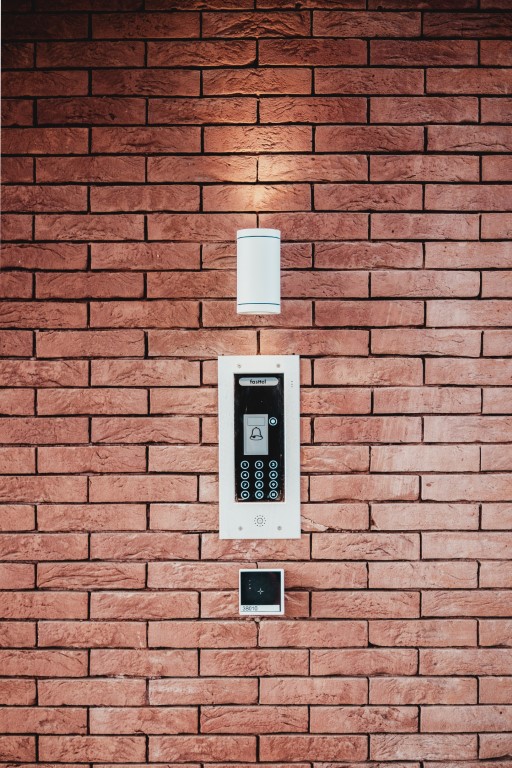
The arming station, also called a keypad, can be either a key operated arming station, requiring the use of a high security key, or, most commonly used, a digital key pad, similar to a touch tone phone. A pre-set combination number is entered in the key pad that arms and disarms the system. Some keypads allow the user to assign a temporary code to a babysitter or houseguest, and then delete the code when it is no longer needed.
The keypad is used to turn the system on and off. The user selects a function and enters a personal code to validate the entry. Most keypads also have a “panic” button or number sequence that will immediately activate the alarm and alert the monitoring service. This button or number sequence will function whether the system is on or off.
Some keypads allow the use of a hostage, or duress, code, which is different than the normal everyday code used. This feature can be utilized if the user is being held against his will, or if an intruder orders him to deactivate the system so an alarm signal cannot be sent.
By using the hostage code instead of the normal code, it appears as if the system has been deactivated; however, the system will actually send a silent signal to the monitoring company, who in turn will call the police immediately. The monitoring company will not call inside the premises to verify the alarm if a hostage code is received.
The siren is an electronic component that emits a loud, hard to ignore sound when activated by the control panel if an intrusion is detected, or when an audible panic button is pressed.
Sirens can be mounted in plain sight, or they can be concealed in an overhang, soffit, attic or other out of the way place.
Strobe lights flash and can use various colored lenses to indicate different events, for example, fire vs. burglary. The flashing can attract more attention than just a siren, and can help make it easier for emergency personnel to locate an alarm.
Strobe lights are also used in combination with a vibrator pad or pager for the hearing impaired, so they are able to “see” or “feel” when their alarm is set off and take the appropriate actions.
What are door sensors and how do they work? How many do I need to install?
Door sensors are magnetic switches that activate an alarm signal when a door is opened, after the system is placed into “armed” mode. They are also commonly called contacts, and can be used on windows as well.
The switch is mounted to the door and the magnet is mounted to the frame directly in line with the switch. This holds the switch in a closed position.
When the door is opened, the switch moves away from the magnet, causing the switch to open, which in turn causes the alarm panel to activate an alarm signal indicating an intrusion.
Door sensors should be mounted on all ground floor entry / exit doors and any upper story entry / exit doors that are accessible by a staircase or permanent ladder.
Because these sensors are subject to repeated opening and closing, as well as various weather conditions, they should be checked on a semi-annual basis to be sure the alignment is still correct and the switch is still functioning properly.
This is especially true if the sensors are placed on a newly installed door, or during any new construction, as normal settling may have an effect on the alignment. Replace worn switches, and realign them as necessary to maintain the integrity of the system.
What are glass break detectors and how do they work? What is a dual-tech glass break detector?
Glass break detectors, also called acoustic sensors, are used to monitor glass that is likely to be broken in an intrusion. They are a good choice for protecting large spaces with multiple, fixed windows, or areas where individual contacts are not desired or practical.
The sensors are housed in a single unit, and are mounted on a stable interior wall or ceiling, facing the main glass surface that needs to be protected.
An acoustic glass break detector “listens” for the high frequency sound, also called pitch, typically created when glass is broken. When impact with the glass is made, the high frequency sound created travels out away from the point of impact. The frequencies are passed through a filter in the sensor, and an alarm is activated if a match to the frequencies of breaking glass is found.
A shock, or seismic, sensor “feels” the typical frequency shock wave that is created when glass is broken. When the processor detects this shock it signals an alarm. These sensors are usually installed on the glass pane if they are single tech detectors.
A dual-tech glass break detector provides the lowest false alarm potential,because is uses both acoustic and shock technologies in one unit, and requires both signals to be activated before an alarm signal is sent. These sensors are housed in a single unit, and are mounted on a stable interior wall or ceiling.
What are motion detectors and how do they work? Are there different types of motion detectors? Can I use them if I have pets?
Motion detectors are used to signal the entry of an intruder into a specific area. They are typically mounted on a stable interior wall or ceiling, and can be set to cover areas of various sizes. Some have a “pet alley” built in, which is designed to eliminate false alarms caused by pets moving in the alarmed areas.
There are several different types of motion detectors, and which one to use will be determined by the area that needs to be protected.
For most residential applications, a Passive Infrared (also called a PIR) sensor is used. The sensor head is typically divided into sectors or zones, with each covering specific areas with specific boundaries.
PIR sensors detect the change of thermal radiation that occurs when an intruder enters a covered zone. They see “hot” images by sensing the contrast between the “hot” image and the cooler background. When the radiation change captured by the PIR exceeds a pre-set value, the thermal sensor produces a signal that is sent to the built in processor for evaluation, and if appropriate, the alarm signal is activated.
Microwave sensors are designed to flood a designated area with an electronic field and are programmed to recognize the Doppler shift frequencies that are most closely associated with human movement. When movement occurs in the area and disturbs the electronic field, the processor determines whether the signal being received falls within a pre-set limit, and if appropriate, the alarm signal is activated.
Ultrasonic Detectors are motion detectors that emit ultrasonic sound energy into an area using air as its medium, which travels in a wave type motion. The sensor “hears” a certain pitch characteristic of the particular environment. If an intruder enters the room, the wave pattern is disturbed and reflected back more rapidly, thereby increasing the pitch and activating the alarm. Dual-tech PIR / Microwave and PIR / Ultrasonic detectors use a combination of both passive (PIR) and active (Microwave or Ultrasonic) sensors, and provide the lowest false alarm potential as signals for both heat and motion must be received by the processor before the alarm is activated.
Audio detectors are comprised of two modules; a microphone that “listens” for noise, and an amplifier that includes processing circuitry to analyze the sounds. The amplifier is calibrated to a noise threshold that is characteristic of an intrusion attempt, and activates the alarm if a certain amount of noise is detected from a monitored area within a pre-set time period.
Photoelectric detectors, also called “beams”, are most often used in commercial applications such as garages, warehouses, schools and office buildings. Beam systems consist of a transmitter that uses LED as a light source, and a receiver that contains a photo-electric cell. An infrared beam is sent from the transmitter to the receiver, essentially creating a “trip wire”. If the beam is broken or interrupted, or if the receiver fails to receive at least 90% of the transmitted signal for a pre-set period of time, the alarm is activated.
Beam systems require routine maintenance, especially when used in an outdoor application, and the alignment should be checked and calibrated monthly.
If you are considering buying a security system, it is important to contact only properly licensed, bonded and insured professionals to discuss your particular needs.
Interview at least three different companies and get everything they recommend or promise in writing. Compare all of the proposals, and take some time to decide what will work best for your situation.
Don’t allow any of the companies to pressure you into buying a system right at that moment; any company that insists you will only get a “good deal if you sign up right now”, or that tells you their system is the only one law enforcement takes seriously, should be disqualified from your consideration.